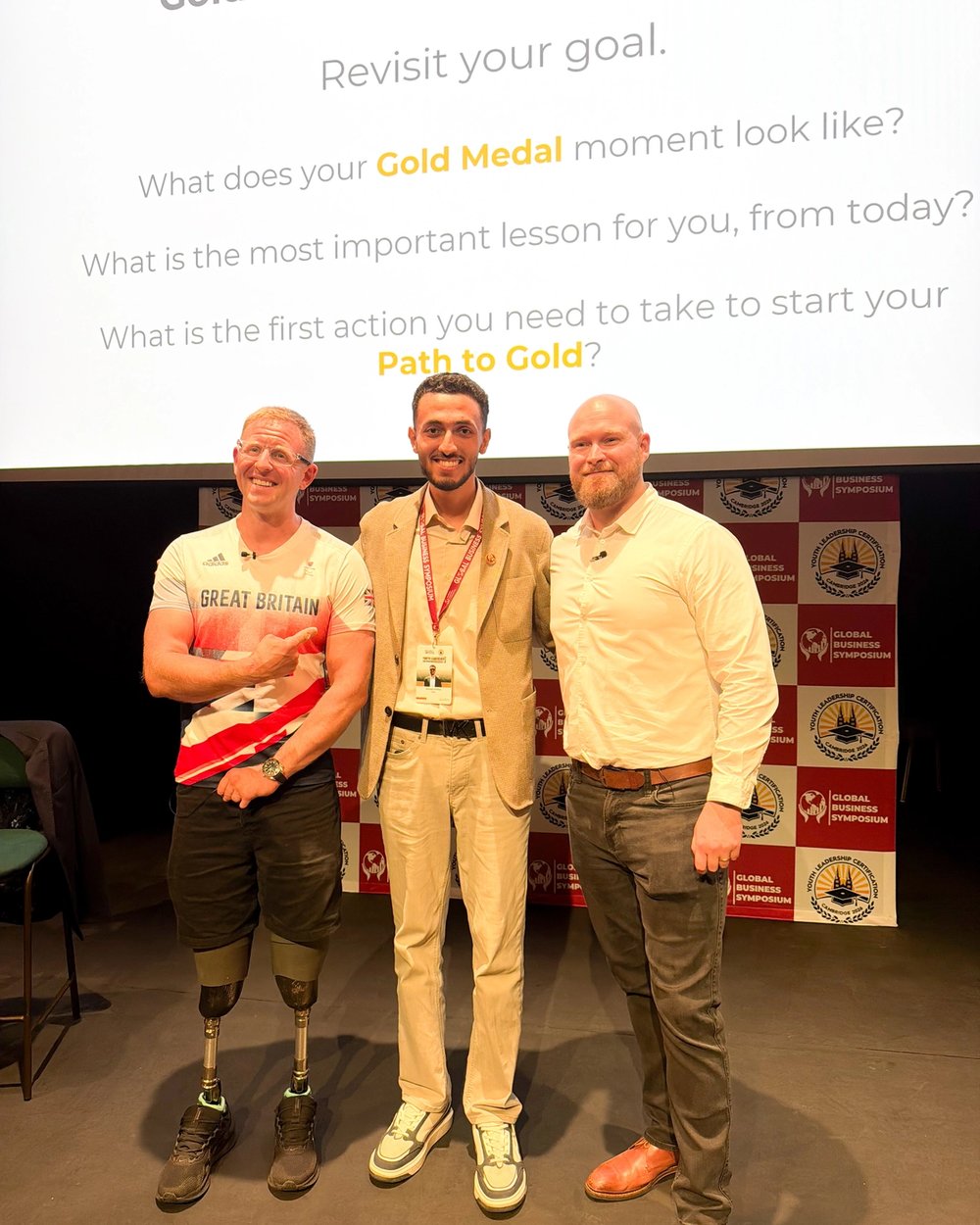
Some names open doors before you even reach them. Oxford is one of them. Put it on your business card, and it starts introducing you before you have said a word.
Andrew White had that name behind him. As Associate Dean of Executive Education at Oxford University, he had the position, the professional security and the standing that many people spend their careers working towards. There was reassurance for his family, too. From the outside, he looked like a man who had arrived.
But at the height of that success, he recognised something uncomfortable: the title he was proud of had stopped describing where he wanted to go. It had become somewhere to hide.
And honestly, who walks away from that? Who gives up a respected career and a name that carries weight to start again without guarantees? Most of us spend years trying to build that kind of security. What makes someone finally reach it, then decide it is time to leave?
When Andrew spoke to us, he did not offer another checklist for becoming a better leader. He put something much more unsettling in front of us: we can genuinely want to change while quietly doing everything we can to prevent it. He called it our “immunity to change.”
It shows up in the sensible reasons we give ourselves for not taking the next step. We call it being realistic. We call it choosing the right time. Sometimes it is good judgement. Sometimes it is a convincing way to protect the familiar, postpone our growth and still feel that we have made a wise decision.
In Andrew’s case, the obstacle was not failure. It was success. How do you persuade yourself to leave Oxford when you already have what everyone else would call a happy ending?
Eventually, that question stopped being a good enough reason to stay. He had reached what he described as a threshold: the point where you have outgrown the role that defines you, but have not yet stepped into whatever comes next.
He was not talking about a promotion or another impressive line on a CV. He was talking about the uncomfortable gap between a life you know how to live and one you have not yet learned how to begin. You want something different, but you are still afraid of losing what you have.
Then came the question he could no longer avoid: how do you ask other people to be brave while keeping yourself safely out of reach of uncertainty? How do you stand in front of leaders, encourage them to venture into the unknown, and make an exception for yourself when it is your turn?
So he did the thing that made the least sense from the outside. He left Oxford.
He stepped away from the title and the institution behind it to work independently in leadership and transformation. He was not exchanging one guarantee for another. He was accepting the uncertainty of starting again—and finally asking of himself what he had been asking of others.
I was still listening to Andrew, but I was no longer thinking about Oxford. I was thinking about myself. What had begun as a talk about someone else’s decision had become a much less comfortable conversation about my own.
Am I really stuck, or have I achieved just enough to become afraid of starting again? Am I protecting my success, or hiding inside it? Could the achievements I am proudest of also be the things keeping me where I am?
That is what stayed with me. Failure is not the only thing that can stop us. Sometimes success gives us such a comfortable place to settle that we forget to ask whether we still want to live there.
Andrew is a tall man. It would be easy to joke that his comfort zone simply was not built to fit him. But after hearing his story, the line stopped being just a joke. Sometimes we leave a place not because there is anything wrong with it, but because staying would mean shrinking our ambitions to fit.
At some point, each of us will stand at a doorway like that. When your turn comes, the question will not be whether the place behind you is a good one. It will be whether it still leaves room for who you want to become. Will you step through—or keep bending to stay?